Garden beds, mulch and the weep holes behind them
Conducive conditions that turn up once a Fraser Rise home is landscaped.




In short: Most termite risk on a new estate is planted, mulched and watered by the owner in the first year.
What a conducive condition is
Anything that gives termites easier access, moisture or food near the house. It is reported separately from activity.
What we recorded
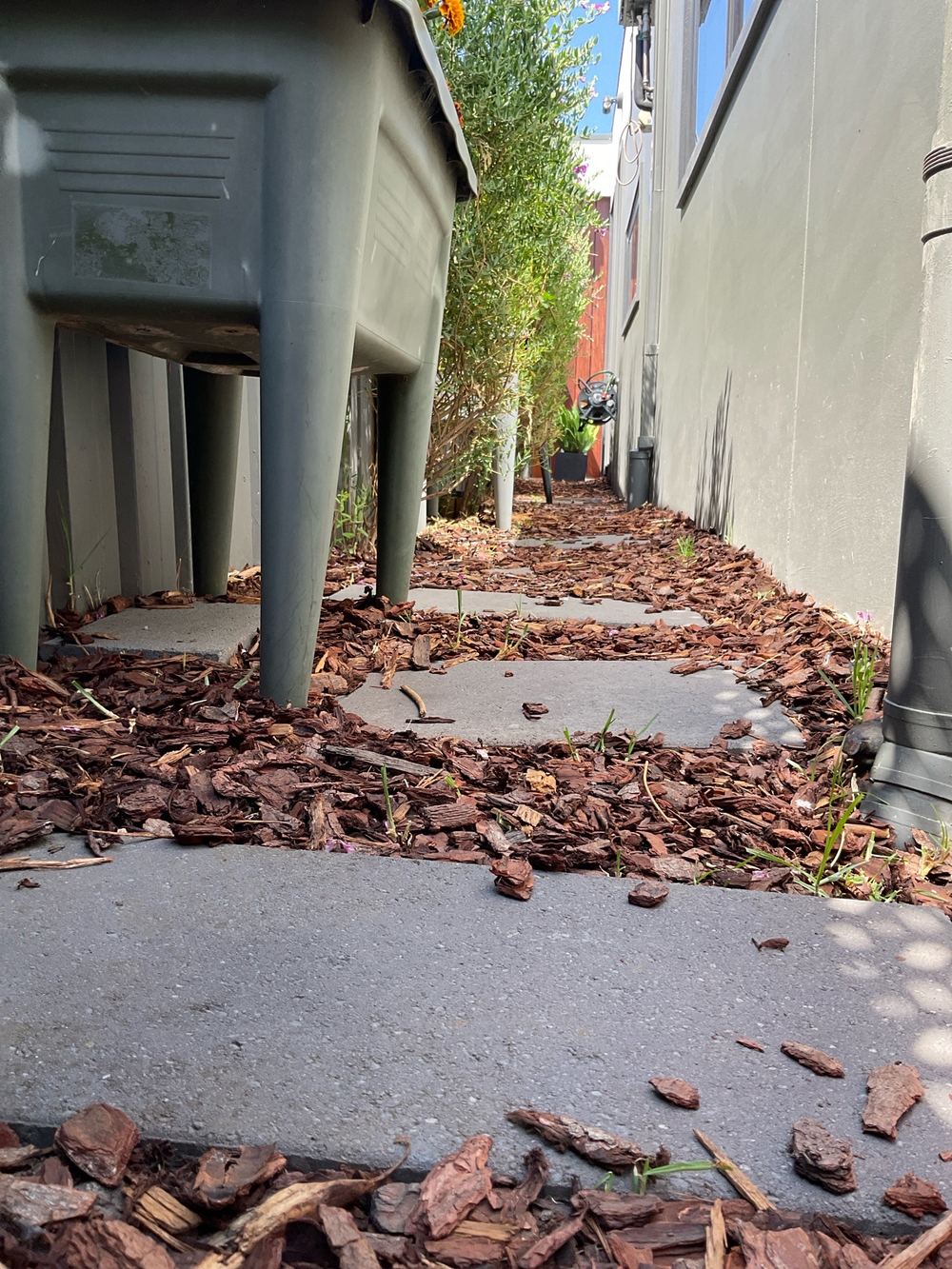
Pot plants, garden beds and mulch hard against the walls of a Maidstone home, with irrigation keeping them wet.
Weep holes
On new homes we also find weep holes full of mortar or sitting too close to the ground. Covered by mulch, they become an entry point and stop the cavity draining.
Keeping the edge clear
Leave the slab edge and weep holes visible, keep beds below them, and keep sprinklers off the walls.
What an inspection gives you
A list of conditions to clear and any evidence found. It is not a treatment or a guarantee.
Written by our local inspection team from work carried out in Fraser Rise. Licensed building practitioners, Building & Plumbing Commission registration CDB-U 53425.